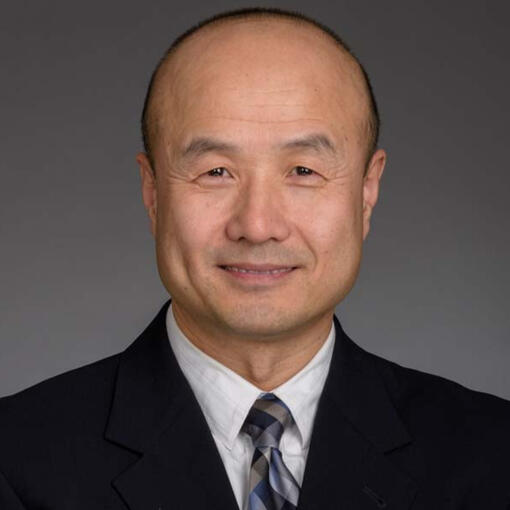
Author of Everything in America: From Beijing to Belonging
HONGWU WANG
"I spent most of my life learning to survive — in Mao's China, in America's boardrooms, and in a country that had no legal place for who I loved. I married the same man four times before I understood that survival and belonging are not the same thing."
EVERYTHING IN AMERICA: From Beijing to Belonging
I married the same man four times—across four legal worlds—before I understood that survival and belonging are not the same thing.EVERYTHING IN AMERICA: FROM BEIJING TO BELONGING is a 59,000-word literary memoir that will appeal to readers of Qian Julie Wang's Beautiful Country and Saeed Jones's How We Fight for Our Lives.I grew up in a crowded Beijing hutong in the aftermath of the Cultural Revolution, where scarcity shaped everything. My family of seven shared two small rooms with five other families. We lived on ration coupons, queued for cabbage, and bathed once a month at the public bathhouse. At Beijing Normal University, I fell in love with another man in a society where such love could not be spoken. After the Tiananmen crackdown, I left China for the United States in 1993 with $700 and little more than hope.In America, I learned that success often meant letting my work speak louder than I did. I built a career in technology and eventually became a partner at a Chicago investment firm, only to discover that professional achievement did not guarantee personal belonging. Over twenty-five years, as American law slowly changed, my husband Mark and I marked our commitment four times: a ceremony in 1997, a civil union in 2003, a marriage in Illinois in 2014, and federal recognition in 2015.
At its heart, this memoir is about a man who learned that survival demands invisibility—but belonging requires allowing oneself to be seen.Today, as conversations about immigration increasingly focus on who belongs, this memoir stands as my testimony to what that open door made possible—and what it cost to live inside it.The title comes from a fortune cookie I received on my first day in America, which read: "Everything in America will go toward your favor."I am a retired partner of a Chicago investment firm and hold degrees from Beijing Normal University and Northern Illinois University. This is my first book.
The Story
Everything in America: From Beijing to Belonging is a literary memoir about a gay Chinese immigrant who survived Mao's China, witnessed Tiananmen Square, and rose to become a partner at a Chicago investment firm — discovering along the way that survival and belonging are not the same thing.The story begins in a cramped Beijing hutong during the aftermath of the Cultural Revolution. As the youngest of five surviving children, the narrator is raised by a fierce mother who kept the family alive through sheer will and a father who filled their crowded courtyard with classical tales from Three Kingdoms and Journey to the West. In a public academic system, excellence becomes the narrator's escape route. He consistently tops every class list, masters geometry, and clears the brutal national Gaokao exam. A color-blindness diagnosis reroutes his destiny from computer science to mathematics, earning him a place at Beijing Normal University.At university, the narrator falls in love with a male classmate — a romance that can only exist in whispers and shadows. When the classmate publicly mocks him to protect his own secret, the narrator burns their photographs, lacking the language for his queer identity. Following graduation, he is assigned to a restrictive government teaching post earning $20 a month. In 1989, political tensions erupt. The narrator joins his students in Tiananmen Square, linking arms to sing the Internationale. Two nights later, gunfire shatters the movement, permanently hardening something inside him. He throws himself into studying English, eventually securing a teaching assistantship at Northern Illinois University. On June 6, 1993, he says goodbye to his family over dumplings; his mother quietly slips a towel into his suitcase.Arriving in New York on a business trip, the narrator slips away from his tour group with a suitcase and $700. He evades company tracking and police searches by hiding in SoHo lofts, relying on the radical kindness of a stranger named Kate to secure a flight to Chicago. Rebuilding his life in DeKalb, Illinois, he excels in his graduate math program. Six months after his escape, his mother dies in Beijing. Because of visa risks, he cannot go home. For four years, she visits him nightly in his dreams, acting as an otherworldly guardian.That winter, watching Maurice on a borrowed VCR, the narrator fully accepts his identity: he is gay, and in America, he can step out of the shadows. In December 1995, he meets Mark on a computer bulletin board. Their first date on December 16 initiates a lifelong partnership. Moving into Mark's Oak Park bungalow, the narrator navigates an exhausting dual existence — the invisible immigrant programmer at Allstate Insurance by day, and a man fully known at home. In 1997, after receiving his green card, he returns to China, only to have his passport confiscated at the Beijing airport. Stranded and terrified, he is saved by a quiet official, Mr. Zhou, who risks everything to return the passport. Weeks later, on December 16, 1997, he and Mark register as domestic partners in Oak Park.Driven to build absolute security, the narrator joins a small hedge fund in 2000 as its foundational employee, absorbing his employer's investment philosophy. In 2006, he transitions to a venerable Chicago investment firm mired in institutional dysfunction. Adopting his father's philosophy to suffer in private to shine in public, he outworks his colleagues, building seamless new billing and reporting systems from scratch. In 2016, his corporate invisibility transforms into ultimate recognition when the executive committee names him partner — a rare achievement for a first-generation technology immigrant.Parallel to his career, he quietly builds real estate security, purchasing foreclosures at the bottom of the housing crisis and managing the properties himself. In 2017, his siblings finally secure visas to visit Oak Park. Cooking dumplings together in his kitchen, the two halves of his life briefly touch. Meanwhile, the narrator's relationship with Mark directly mirrors the legislative march of American civil rights. They marry four times, always on December 16: a 1997 domestic partnership, a 2003 county civil union, a 2014 state marriage, and 2015 federal recognition.Retiring in 2024, the narrator reflects on his journey from a rooftop in Jordan. He recognizes his life as profoundly privileged because he knows exactly what it cost to build. Though rising geopolitical tensions prevent him from returning to Beijing, his mother's towel remains in his desk drawer. At its heart, this memoir is the story of a man who learned that survival demands invisibility — but belonging requires allowing oneself to be seen.
About the Author
Hongwu Wang was born in 1964 in a Beijing hutong, the youngest of five children in a family of seven sharing two small rooms with five other families in a crowded courtyard. They lived on ration coupons, queued for cabbage, and bathed once a month at the public bathhouse. His mother never learned to read; his father earned 55 RMB a month. Hongwu had three pairs of socks.He had everything else.His father filled their courtyard with stories from Three Kingdoms and Journey to the West, and told him: "If you want to shine in public, you have to suffer in private first." His mother kept the family alive through sheer, quiet will. His sister raised him from age two while their mother worked. From this beginning — narrow and poor but held together by love — Hongwu learned the lesson that would carry him across an ocean and through three decades in America: work harder than anyone else, and let the work speak for itself.He excelled at Beijing Normal University, one of China's top institutions, where he studied mathematics and discovered both his first love and his lifelong best friend. He witnessed the Tiananmen Square protests firsthand in 1989 — sitting in the square with his students, arms linked, singing the Internationale — and watched the crackdown shutter the brief hope of a freer China. Before leaving China, he served as Muhammad Ali's personal translator during a boxing event in Beijing — a surreal glimpse of a world far larger than his own. He taught himself English through Voice of America broadcasts and conversations with foreigners on the streets of Beijing, passed the TOEFL and GRE, and in 1993 arrived in America with $700 in his pocket, a tourist visa, and a fortune cookie slip that read: "Everything in America will go toward your favor."It was not easy. He hid in a SoHo loft while the company he'd traveled with contacted the police. He arrived in DeKalb, Illinois — cornfields in every direction — and earned two master's degrees in two years while serving as a teaching assistant. He called the numerator "the upstairs number" and the denominator "the downstairs number." His students were kind. His first paycheck was $980, and he felt like the richest man alive.He built a career in Chicago that took him from mainframe programmer to Chief Information Officer to partner at a major investment firm — a trajectory that spanned Allstate Insurance, a Chicago hedge fund, and nearly two decades at an investment advisory firm managing billions in assets. He became partner in 2016, one of the few first-generation immigrants — and among the even fewer technologists — to reach that level at a firm of that caliber. The billing and reporting systems he built from scratch are still running today.Along the way, he fell in love. On December 16, 1995, he met Mark on a computer bulletin board. They have been together ever since, marking their commitment four times as American law slowly evolved: a domestic partnership in Oak Park in 1997, a county civil union in 2003, an Illinois marriage in 2014, and federal recognition in 2015. Always on December 16th. Always in the home they have shared for nearly thirty years in Oak Park, Illinois — the hometown of Ernest Hemingway and Frank Lloyd Wright, and now, quietly, of Hongwu Wang.He retired in 2024. He has traveled to more than fifty countries, is learning Spanish, and still sings while he cooks — old Chinese songs from his childhood, sometimes bits of Peking Opera. His husband Mark plays piano in the next room.EVERYTHING IN AMERICA: FROM BEIJING TO BELONGING is his first book.
Read an Excerpt
Prologue — The Country I Fell in Love With
I grew up in a Beijing hutong, in a world where life was narrow and predetermined.
We did not dream big. We did not imagine different futures.
The walls were close; the rules were fixed.
A boy like me was expected to follow the path laid out for him—no detours, no questions.But inside me, there was always a small, restless door that refused to stay shut.
I didn’t know where it led.
I only knew it wasn’t here.When I came to America in 1993, I didn’t come seeking wealth or adventure.
I came because I needed a chance—just one—to step beyond the walls I had grown up with.
And America, astonishingly, offered it.Everything I became—every step forward, every reinvention, every moment of belonging—was born from that simple act of welcome.
America gave me room to breathe, to try, to fail, to begin again.I loved this country from the start—not blindly, not perfectly, but with a gratitude so deep it felt like faith.Today, that faith is harder to hold.
I watch America struggle with itself, turning inward, turning fearful, turning against immigrants who remind me of the boy I once was—standing in a Beijing courtyard, imagining a larger world he had never seen.But I believe this moment will pass.
It must.
Because the America that opened its door to me still exists beneath the noise and the fear.This memoir is my testament to that America.
To the chance it gave a boy from a hutong.
To the life that grew from that chance.
And to the hope—quiet, stubborn, unwavering—that this country will remember how to open its arms again.